
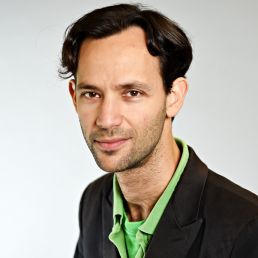
picture of Alan Moses

New map of proteins may help in understanding mutations linked to cancer and ALS

Researchers at the University of Toronto and the Hospital for Sick Children (SickKids) have released a "map" that can make predictions about the biological functions of thousands of mysterious regions in human proteins known as intrinsically disordered regions (IDRs).

The breakthrough could be an important step toward understanding the proteins that are mutated in diseases like cancer, neurodevelopmental and neurodegenerative disorders, such as amyotrophic lateral sclerosis (ALS).
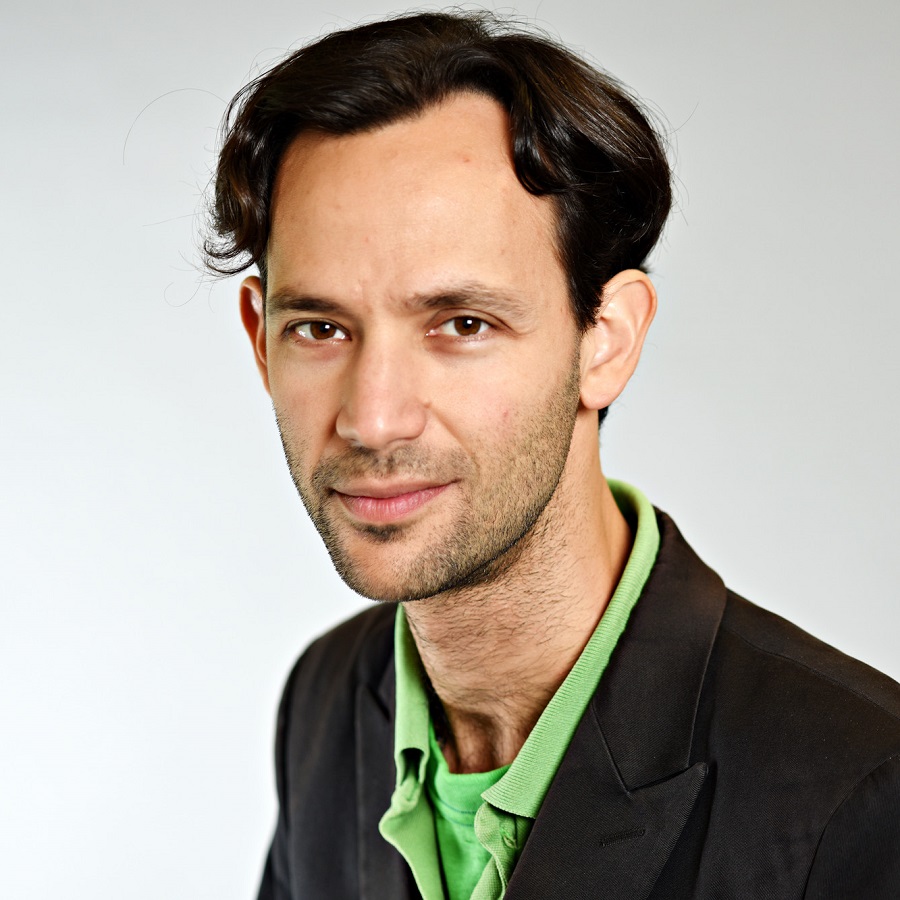
picture of Alan Moses
Professor Alan Moses

The research is described in the paper, “A functional map of the human intrinsically disordered proteome,” published in the Proceedings of the National Academy of Sciences.

The lead author is Iva Pritišanac, a former postdoctoral researcher at U of T and SickKids, who is currently a research group leader at the Institutes of Computational Biology and Structural Biology at Helmholtz Munich. Her lead co-authors include Alan Moses, a computational biologist and professor in the Department of Cell & Systems Biology in the Faculty of Arts & Science; and Julie Forman-Kay, senior scientist, Molecular Medicine, SickKids; and professor (status only), Department of Biochemistry, Temerty Faculty of Medicine.

Proteins do many of the major jobs in our cells; they enable the digestion of lactose, copy our DNA, carry oxygen in your blood, and more.

Classically, proteins are known to do their jobs because of their 3-dimensional shape structures. Thanks to the deep-learning/AI revolution, major breakthroughs in the last few years — including Nobel prize-winning work — have led to computer programs that can predict the 3D structures for most proteins. Knowing these 3D structures can tell scientists a lot about the jobs performed by the thousands of proteins still poorly understood.

However, the same structure prediction programs strongly predict that many protein regions don’t have stable 3D structures and instead are intrinsically disordered. These IDRs are found among proteins that cause diseases like cancer and neurological disorders when mutated, such as the proteins encoded by the BRCA genes that are mutated in breast cancers. Because most of their sequences don’t have stable 3D structures, it’s been challenging for scientists to determine the normal jobs of these kinds of proteins.

The team, led by Moses and Forman-Kay, invented a new computer program to predict the functions of IDRs and applied it to nearly 20,000 proteins encoded in the human genome.

As a result, the biological functions for thousands of human IDRs are now freely available for the first time. According to Moses, the key breakthrough was to transform the proteins into data points in a more than 100-dimensional space of chemical and amino acid sequence properties, like electric charge, ability to dissolve in water, and presence of amino acids motifs that enable binding to other proteins.

“Projecting into a high-dimensional space actually made the problem of predicting IDR function easier,” says Moses. “When we first discovered this, it was one of the most surprising moments I can remember.”

“Alan and I developed this approach a number of years ago and first applied it to yeast,” says Forman-Kay, a world-renowned expert in IDRs. “Our first published paper about it was in 2019.

“This new work is our application of that theory to the human proteome, and the potential for understanding disease and health issues in humans is really exciting. We've been working on the theory for years, but this is the systematic application to the human proteome.”

The researchers’ new approach could provide insight into the BRCA1 and BRCA2 proteins and how mutations in them cause breast cancer. The proteins are mostly disordered and have been studied for decades, but their functions are still not understood.

"Exploration of the map of the human IDRs led me to predict that BRCA1's normal job is to help position the recombination enzymes on the meiotic chromosomes,” says Moses.

“Recombination is the exchange of genes between chromosomes, and usually happens during meiosis, when sperm and egg cells are made. At first this seems to have nothing to do with cancer, but in fact, cancer causing mutations often lead to genome instability, exactly what we might expect to happen if recombination isn't working correctly.

“If we can understand that function of these proteins using this new approach, then when the mutations happen, we could potentially fix the mutations and prevent the cancer,” says Moses. “That's the most exciting implication of this kind of work.”

There is still a lot to learn about IDRs, and Forman-Kay, Moses and several other groups around the world are now working to understand how exactly they do their jobs without stable 3D shapes.

“We have the hypothesis that highly dynamic interactions of IDRs in the cellular environment are key to the mechanisms of IDR function” says Forman-Kay. “Although I’ve been working on IDRs for many years, this new computational approach makes it an exciting time for our field.”

This story by Christopher Sasaki was originally published on the Arts & Science website.


Launching the Professional Master's Program in Data Science for Biology

The University of Toronto’s Master of Science in Applied Computing (MScAC) program, in collaboration with the Department of Computer Science, the Department of Laboratory Medicine and Pathobiology, and the Department of Cell & Systems Biology, is proud to announce the launch of two new academic concentrations that will reshape the future of bioinformatics and healthcare. These new concentrations are Data Science for Biology and Artificial Intelligence in Healthcare – both of which are new graduate field offerings that are uniquely joint with the Department of Computer Science.

The Data Science for Biology concentration will train students with an affinity for computational analysis to become bioinformatics analysts and developers. Students of this new concentration will gain access to hands-on instruction that makes use of cutting-edge algorithms and tools to evaluate, manipulate, record, and present complex biological data. Graduates of the MScAC program who complete the Data Science for Biology concentration will enter the multi-billion-dollar bioeconomy that is experiencing tremendous growth driven by the boom of big data and transformative developments in medicine, precision agriculture, consumer-focused bioproducts and services, and synthetic biology. With this ‘bio revolution,’ these industries have grown increasingly interested in recruiting highly trained bioinformaticians to work in analogous capacities to problem-solve for real-world complexities.

Nicholas Provart, Chair of the Department of Cell & Systems Biology states, “We believe that the proposed concentration will help meet demand by filling a gap between existing undergraduate and PhD-level offerings, further integrating activities between the partnering academic units, elevating the quality of training within those units, and aligning with the University’s ambitions in and commitments to Data Science for Biology.”

The Artificial Intelligence in Healthcare concentration will be the first of its kind to provide applied machine learning training for students with a desire to enter the field of healthcare as either medical experts or computer scientists/engineers. This subdiscipline is at the forefront of a new chapter of medicine where disciplines that traditionally were deemed outside of the realm of healthcare now have the opportunity to improve patient health and healthcare, and thus the quality of life. The Government of Canada and the Canadian Institute for Advanced Research (CIFAR) have recently stated that there is a huge gap in supply of quality training programs in AI for healthcare that meet the demand of healthcare institutions and healthcare providers. This new concentration will be able to scale up the next generation of professionals who want to positively impact medicine.

“Artificial intelligence promises to enhance the practice of medicine. This program addresses a large unmet societal need in developing knowledge in this area. It is a unique joint program between medicine and computer science that will allow students, scientists, and clinicians to receive the training they need to be truly equipped to facilitate safer development and deployment of AI into healthcare,” says Dr. Rita Kandel, Professor and Chair of the Department of Laboratory Medicine & Pathobiology.

Eyal de Lara, Chair of the Department of Computer Science shares, “We take great pride in the Master of Science in Applied Computing and in our partnership with the Department of Cell & Systems Biology and with the Department of Laboratory Medicine & Pathobiology. The two new concentrations we are announcing today build on the many successes of MScAC.” Arvind Gupta, Academic Director of the Master of Science in Applied Computing program adds, “These two novel concentrations will train our students in the multi-disciplinary techniques needed to address the myriad of social challenges facing us. We look forward to seeing the many amazing discoveries our students will make in the years to come.”

The MScAC program is a 16-month professional master’s program with the mission to provide students with a deep understanding of theory and practical applications of computer science and its related fields. In addition to these new concentrations, the MScAC program offers concentrations in Data Science, Applied Mathematics, Computer Science, Artificial Intelligence, and Quantum Computing. Two of these existing concentrations were recognized by Forbes as “The 10 Best Artificial Intelligence and Data Science Master’s Courses” in 2021. MScAC gradates not only gain truly unparalleled experiences through the program’s academic concentrations, but they also acquire practical applied training that equips them to become the next generation of world-class innovators.

The Data Science for Biology and AI in Healthcare concentrations will be available in the Fall Semester of 2023. MScAC applications for Fall 2024 are open in early October of 2023 and interested students are encouraged to visit the MScAC website for more information.


Professor Nick Provart is awarded Genome Canada Bioinformatics and Computational Biology Grant

Congratulations to Professor Nick Provart for his successful Genome Canada Bioinformatics and Computational Biology Competition grant. Nick's grant was one of only eight proposals to Ontario researchers funded this round.

ePlants Pipeline and Navigator for Accessing and Integrating Multi-Level ‘Omics Data for 15 Agronomically Important Species for Hypothesis Generation
Project leader: Nicholas Provart, University of Toronto
Lead Genome Centre: Ontario Genomics
Total funding: $250,000

In the past five years alone, huge amounts of data have been generated for 15 plant species important for Canada, including poplar, maize, rice, barley, wheat, soybeans and tomatoes. Being able to efficiently use these data will be key to improving and managing these crops to feed, shelter and power a world of 9 billion people by the year 2050.

The ePlant Framework, developed under a previous Genome Canada grant, permits researchers to easily see where and when a gene is “active” and whether there are natural genetic variants that might allow it to do its “job” better; populated only with one species, it now needs data from more species. Lead researcher Dr. Nicholas Provart (University of Toronto) plans to develop an ePlant Pipeline to facilitate the ability to create any ePlant, based on genomic or exome sequence data. The ePlant Navigator will permit cross-cultivar and cross-species comparisons, supporting robust hypothesis generation. Easy access to these data sets will enable researchers to explore genetic diversity, gene expression, and other data for important genes towards crop improvement.


Alan Moses awarded a Canada Research Chair in Computational Biology

Congratulations go out to Alan Moses who has been awarded a Canada Research Chair in Computational Biology. This is one of 34 new CRCs awarded by the University of Toronto this year.


CSB Leads an African-Canadian Meeting to Address the Growing Problem of Coconut Disease in the Ivory Coast and Associated Gender Equity Issues

CSB faculty Keiko Yoshioka, along with co-organizers Shiho Satsuka (U of T Anthropology) and Yaima Arocha Rosete (Sporometrics), held a week-long African-Canadian Collaborative meeting & training workshop to bring together plant pathologists and other researchers to work on techniques for identifying and preventing a blight that has devastated coconut crops in the Ivory Coast. The ongoing project, funded by Foreign Affairs, Trade and Development Canada and the International Development Research Centre, has previously provided training in disease detection for researchers from the Ivory Coast’s National Centre for Agronomy Research and University of Nangui Abrogoua. The recent session offered more advanced training focusing on techniques available using new equipment funded by the grant.

The meeting included a two day hands-on workshop led by Dr. Pauline Wang of the Centre for the Analysis of Genome Evolution & Function (CAGEF) to instruct participants in genomic methods for the detection and identification of plant pathogens.

A gender workshop was held on the last day. Gender equity is an important issue for coconut farmers in the Ivory Coast since many of the farmers are women, so failed crops can have devastating consequences for them.  One of the goals of the initiative is to empower women and improve the livelihood of these farmers.


Congratulations to CSB Faculty for their CIHR Awards

Congratulations to CSB faculty: Tony Harris and John Peever for their successful CIHR Transitional Operating Grants!


Congratulations to CSB Faculty for their NSERC Awards

Congratulations to CSB faculty: Thomas Berleth, Les Buck, Dinesh Christendat, David Lovejoy, Jennifer Mitchell, Peter McCourt, Sergey Plotnikov, Maurice Ringuette, and Melanie Woodin for their successful NSERC Discovery Grants. Special congratulations to Les Buck for receiving an NSERC Discovery Accelerator Award.


CSB Senior Lecturer Melody Neumann receives the Faculty of Arts & Science Outstanding Teaching Award!

Congratulations to CSB Senior Lecturer Melody Neumann who is a recipient of this year’s Faculty of Arts and Science Outstanding Teaching Awards. Dr. Neumann is an exceptional biology teacher that has made outstanding contributions to teaching innovation and course design. These innovations are best exemplified by the online learning tools she has developed, the inverted classroom she created and implemented, and the capstone team-based learning course she designed and taught. Dr. Neumann received her award from the Dean of the Faculty of Arts and Science, Dr. David Cameron, at an awards ceremony on May 11th, 2015.


Congratulations to Nick Provart and John Peever on their promotions to Full Professor!

The Department of Cell & Systems Biology is very happy to announce that Drs. Nicholas Provart and John Peever have been promoted to Full Professor. Congratulations on an important and well-deserved recognition.


Prof. Vince Tropepe appointed as new CSB Departmental Chair

Congratulations to Prof. Vince Tropepe on his appointment as CSB Departmental Chair for a five year term.