

A daring application and hard work earn Stella Chen the top plant biology undergraduate award
Stella Jiaying Chen was singled out as one of the best plant biology undergraduates in North America, earning the SURF fellowship from the American Society of Plant Biologists to work in Professor Heather McFarlane’s lab for the Summer of 2025.
Chen's plant biology research journey began with one serendipitous CLNX search. When she came across the Work-Study posting for the McFarlane lab, she quickly connected the experience required for the position to her experiences with DNA extraction and PCR in undergraduate lab course BIO130. Despite only being in her first year, Chen sent in her Work-Study application and was ultimately successful.
She began her 2024-2025 placement by providing support to graduate students in the lab. But she soon became interested in pursuing her own research program. Fostering this interest, McFarlane suggested she apply to the SURF fellowship for the 2025 summer term.
The Summer Undergraduate Research Fellowship is granted to undergraduates to support laboratory research in plant biology over the summer. Applicants write a project statement and a personal statement and provide a mentoring statement from the supervising faculty member. The award includes a stipend for the student and money to buy supplies for experiments.
“Receiving this award was unexpected; it hasn’t really hit me since I’m just working in the lab every day,” says Chen. “I have to present my research in a poster at the annual ASPB conference, so thinking about that is when I get excited… and nervous.”
Chen transitioned to conducting her own research quickly and is enjoying the informative (and pretty) data she is gradually pulling out of her microscopy studies. She is working with cutting edge technology in transmission electron microscopy and spinning disc fluorescence microscopy.
McFarlane’s lab looks at how the cell wall is constructed in plants, using the Arabidopsis model plant. Chen is focusing on Quasimodo mutants which have a defect in the synthesis of pectin, a crucial component of the cell wall.
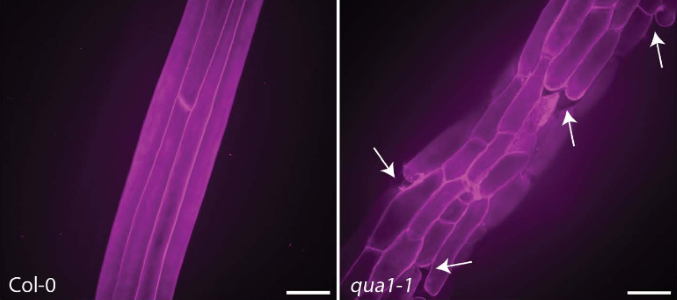
The mutant seedling's shoots have short cells with holes forming where cells fail to stick to their neighbours in the expected orderly fashion. Their leaves look like they are peeling as cells lose their connection to adjacent cells during elongation.
Natalie Hoffmann, a former graduate student in the McFarlane lab, had observed aggregates in Quasimodo mutants during her studies, naming them “qua bodies.” Chen describes their appearance as similar to microscopic fried eggs.
Following up on this work, Chen has been aiming to find whether qua bodies may contain pectin. She has also been working to determine whether NKS1 mutants, which similarly have mutations in pectin synthesis, also contain qua bodies.
Reflecting on her research experience thus far, Chen expresses her immense appreciation for the opportunity to work on a project, a task often reserved for upper year students.
Congratulations, Stella!
Alumni Reunion 2025 lets our guests take on the role of undergraduates in Biology
CSB was out in force with events at University of Toronto’s Alumni Reunion 2025. We held Open Houses in our teaching laboratories that allowed alumni from a variety of departments to take on the role of Biology undergraduates. Alumni learned fundamental lab techniques: how to measure tiny volumes of water and the tricks to adjusting a microscope. They moved to more advanced techniques like bacterial identification and gene editing. Their children were fascinated to watch and participate as our volunteers facilitated hands-on kids activities.
Picking up the Pipettor

CSB Teaching Assistants Emily Deng and Andrea Taylor began by taking our visitors through the ways we measure exact volumes of water in the lab with mechanical pipettors. They then went through the process of making adjustments to their microscope to ensure an evenly lit and clear image.
The adjusted microscopes gave our guests a clear look at paramecium, single-celled organisms that are a favourite in introductory courses, including in BIO130 labs. Active threads, or cilia, can be seen facilitating movement. Alumni saw that another fascinating feature of the paramecium is its contractile vacuoles that swell and empty to maintain the appropriate amount of water in the cell.
Training at the Forefront of Biotechnology
Our Human Biology (HMB) Open House showcased a gene editing lab carried out in HMB’s Genetics third-year lab course, HMB311. Dr Alistair Dias explained how students in this course use jellyfish DNA to make cells glow green. The purpose of this unusual trick was explained as alumni were introduced to the CRISPR technique; CRISPR is the most recent and cutting-edge gene editing technology; our visitors learned how HMB students use CRISPR to alter one DNA letter code in the cells to change cells from glowing green to glowing blue! Many alumni made the connection from jellyfish to human health and disease, such as the use of CRISPR in treating the devastating disease sickle cell anemia.
In another fascinating session, Dr Naijin Li introduced alumni to a neuroscience-focused lab demonstration from HMB310. Li guided participants through how HMB students study the development of cells into neurons. Participants used fluorescence immunostaining to visualize these cells at different stages in their maturation journeys using a marker of neuron-specific structural proteins. They observed differences in the appearance of mature cells compared to unspecialized cells and enthusiastically noted that a greater number of the mature cells lit up with the structural protein marker.
In Dr. Haley Zubyk’s session, guests participated in a hands-on lesson exploring antibiotic resistance. Zubyk guided participants through a step-by-step experiment to prepare and observe their own bacterial samples using Gram staining. Alumni explored the importance of selecting the right antibiotic for an infection based on the results of Gram staining. Through this exercise they appreciated the importance of cutting down on overuse of antibiotics and use of inappropriate antibiotics which can lead to the development of resistance.
Guests Were Impressed by the Depth and Breadth of Biology Undergraduate Studies
These activities gave alumni a look into the microscopic world of paramecium and neurons, insight into the perils of antibiotic resistance, a crash-course on the basics of proper microscope and measurement techniques, and perhaps a reminder of everything they had learned and everything they had yet to grasp.
Following the antibiotic session, attendees highlighted their appreciation for the interactive format and its connection to real-world medical practices, such as what happens to patient samples after a visit to the doctor’s office. Throughout all of the sessions, alumni were universally impressed by the depth and breadth of research that CSB and HMB undergraduates are exposed to, such as the use of the cutting-edge CRISPR technique in an undergraduate lab.
Alumni learned more about how CRISPR is used in yeast at Professor Lumba's sold out Stress-Free Lecture on the "Secret Language of Plants and Fungi".
Alumni Learning Alongside Their Kids

For our Kids’ Passport event, there was a line out the door to gaze inside the cell. Our young guests moved through the room looking at soil worms, taking pictures with a smartphone microscope, learning about regeneration and recreating tiny structures inside the cell with modelling clay.
Imaging Specialist Kenana al Kakouni showed tiny Daphnia water fleas, whose beating hearts are visible through their transparent bodies. As one toddler looked, they shouted, “I met him!” and named the flea after a second look in the microscope: “He is Lolo!”
As their children were absorbed in activities, alumni parents chatted with our volunteers about CSB discoveries in cancer, biophysics and vision loss, wrapping up a fruitful day of learning.
Special thanks to all our volunteers: Professor Heather McFarlane, Alice DesRoches, Linda Li, Ruby He, Emily Huang as well as those mentioned above!

Decades of dedication by Professor Provart recognized in Arabidopsis community award
Professor Nicholas Provart has dedicated decades to the Arabidopsis community, performing research as well as communicating and teaching about this crucial model plant. Recently, the community showed their appreciation for what he has given to them.
Provart was awarded a Later-Career Award for Dissemination of Arabidopsis Knowledge by the North American Arabidopsis Steering Committee (NAASC). This award was presented at the 2025 International Conference on Arabidopsis Research in Gent, Belgium.
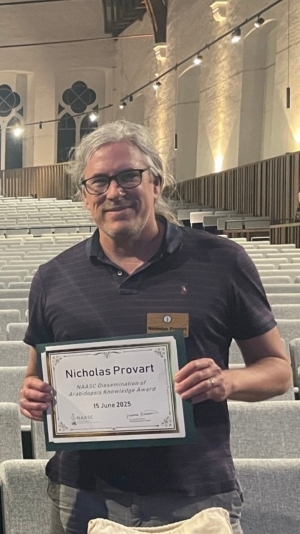 The NAASC award glowingly asserts that "Through visionary pedagogy, widely adopted open-access resources & relentless advocacy, Nick sets the standard for sharing Arabidopsis knowledge. His impact on plant biology science, education & communication has been truly transformative."
Provart is Professor in Plant Cyberinfrastructure and Systems Biology at CSB and the Department Chair. He was President of NAASC from 2014-2015. His research at the department has previously earned him a 2018, 2019, and 2020 Highly Cited Researcher award from Clarivate Web of Science.
He has made notable contributions to the bioinformatics field, including spearheading the creation of the Bio-Analytic Resource, a globally recognized computational platform for generating hypotheses by bringing together different types and sources of data. Originally built for the Arabidopsis thaliana model organism, BAR eFP and ePlant now provides genomic data for 30 plant species.
Provart has also dedicated himself to educating the next generation of scientists both at U of T and as a long-time online educator on the publicly accessible platform Coursera.
Provart commented that he “has been very privileged to work with 83 undergraduate students on BAR projects, dozens of graduate students, and BAR-tender extraordinaire, Asher Pasha, over the past 20 years. It is through their efforts that the BAR has become a widely used and trusted resource”.
Stay tuned for Provart’s upcoming online public lecture as an award recipient. Congratulations Nick!
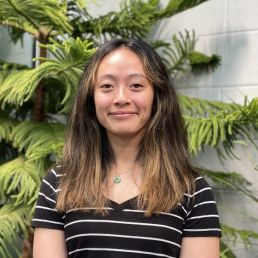
CSB Teaching Assistant Christine Nguyen recognized as among the best TAs at the University
The greatest educators inspire and enable students to persevere through difficulties and to strive for the best. Christine Nguyen—a PhD candidate in the Nambara lab—has received the university-wide TA Training Program (TATP) Teaching Excellence Award for her ability to do just that.
The TATP Awards recognize TAs from across the University of Toronto who create an accessible and equitable classroom environment, engage students, and organize their sessions well. “She reduced barriers to learning and supported the inclusion and engagement of all students in our tutorial,” wrote one student of Nguyen’s teaching.
The award criteria also highlight the importance of effectively communicating content and expectations to students, providing thoughtful feedback for improvement, and seeking opportunities to grow as an educator while implementing innovative teaching techniques. This was exemplified by comments from students that “Christine would go above and beyond to provide us with relevant and clear examples for our assignments, especially for assignments based on newer and complicated concepts”
Nguyen began her journey as a TA in 2021 and has taught BIO130, BIO230, and CSB349. She was recently a Head Teaching Assistant for BIO130 and is a two-time winner of the CSB Teaching Award.
Congratulations Christine on this fantastic achievement!

Educational impact leads to awards for TA Excellence
Whether it’s your first year in undergraduate studies at university or your last, doing well academically while enjoying your learning can be tough. But the winners of this year’s CSB TA Teaching Excellence Award helped make it easier! Selected via student nominations, the winners brought both passion and knowledge to their teaching in courses at the Department of Cell and Systems Biology.
The CSB TA Teaching Excellence Award winners in 2024-25 are graduate students Ahmed Abdelmoneim (BIO130), Ben Brookbank (CSB350), Sharanja Premachandran (BIO130), and Christine Nguyen (CSB349). BIO130 is our introductory course in Molecular and Cell Biology; the first chance for many students to experience university-level biology. CSB349 and 350 are challenging courses that require deep biological knowledge gained over years of study.
Building understanding
In their nominations, students reflected on Abdelmoneim’s ability to foster true understanding of the content rather than promoting mere memorization. This was a conscious effort on Abdelmoneim’s part: “I tried to put a piece of myself in the work and give the students some things to remember, little nuggets they can reflect on. They may not know it, but they helped me transform as a teacher along the way.”
Growing as an educator
Brookbank has been working hard to grow as an educator during his time as a graduate student. “This is positive reinforcement that I've done something right and that I'm moving in the right direction in terms of being a good teacher. I'm grateful that the students are appreciative of that accomplishment.” Students commented on Brookbank's easy manner that made complex genetic concepts engaging.
Supporting student needs
For Premachandran, ensuring the needs of every student is met is critical. Students mentioned this in their nominations, writing that they always felt supported. “This award means a lot more to me than other awards, since it means that the students really appreciated my efforts to quell their anxieties when taking on new laboratory skills," says Premachandran.
Addressing difficult concepts
This is Nguyen’s second time winning the award, this time for a different course: “I was nominated for CSB349, which I find wild; I remember taking 349 when I was in third year and I knew as a student it was a very difficult course. I'm glad that I was able to leave that impact on students’ learning.” Students noted that Nguyen engaged everyone in tutorials and supported them along their learning journeys.
Congratulations to all the winners for their commitment to excellence in teaching!
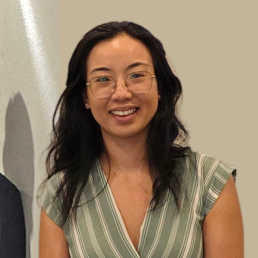
Rebecca Tam's skill at the microscope earns Hone-Buske Award for outstanding paper
A passion for detailed microscopy work has earned Rebecca Tam the Dr. Christine Hone-Buske Award from the Department of Cell & Systems Biology.
Tam's outstanding publication "Centrosome-organized plasma membrane infoldings linked to growth of a cortical actin domain" in the Journal of Cell Biology explores how the membranes delineating nuclear chambers form in the multinucleated Drosophila embryo.
Tam's skill at gathering relevant data from a microscope was acquired early on while learning biology in Grade 8. She continued her passion for biology, even sampling streams for a project at David Suzuki Secondary School. As an undergraduate at U of T, she undertook a fourth-year research project in the Harris lab which inspired her to pursue further research as a PhD student.
The Harris lab is interested in the molecular mechanisms behind multicellular development using the Drosophila model system. During the early stages of development, Drosophila cell nuclei duplicate without cellular division, leading to folds in the plasma membrane that mark where past nuclear divisions have occurred.
Using spinning disk confocal microscopy, Tam’s project revealed the role of the centrosomes, the microtubule highways emanating from centrosomes, and effect of the proteins that "drive" on these highways on creating these folds.
Tam’s microscopy work was also recently recognized when she was won an award in the Nikon Small World Toronto imaging competition.
In the near-term, Tam is continuing her work on plasma membrane topography, this time in a different developmental stage. “We’re looking at myosin activity within the highly folded plasma membrane that is used to pattern nuclei throughout the early stage of Drosophila development,” explains Tam.
Tam’s involvement at U of T extends beyond the lab and into event organization and entrepreneurship; she has enjoyed her time organizing Falling Walls Lab Toronto, an opportunity for scientists in the city to pitch how their work can change society for the better.
When reading about this award in honour of the late Christine Hone-Buske, Tam was struck by how closely her interests aligned with Hone-Buske's business and science communication pursuits.
Dr Rebecca Tam has now completed her PhD studies and will pursue her passion for research by honing her skills in post-doctoral studies in the Kapoor lab at Rockefeller University.
Congratulations Rebecca!